
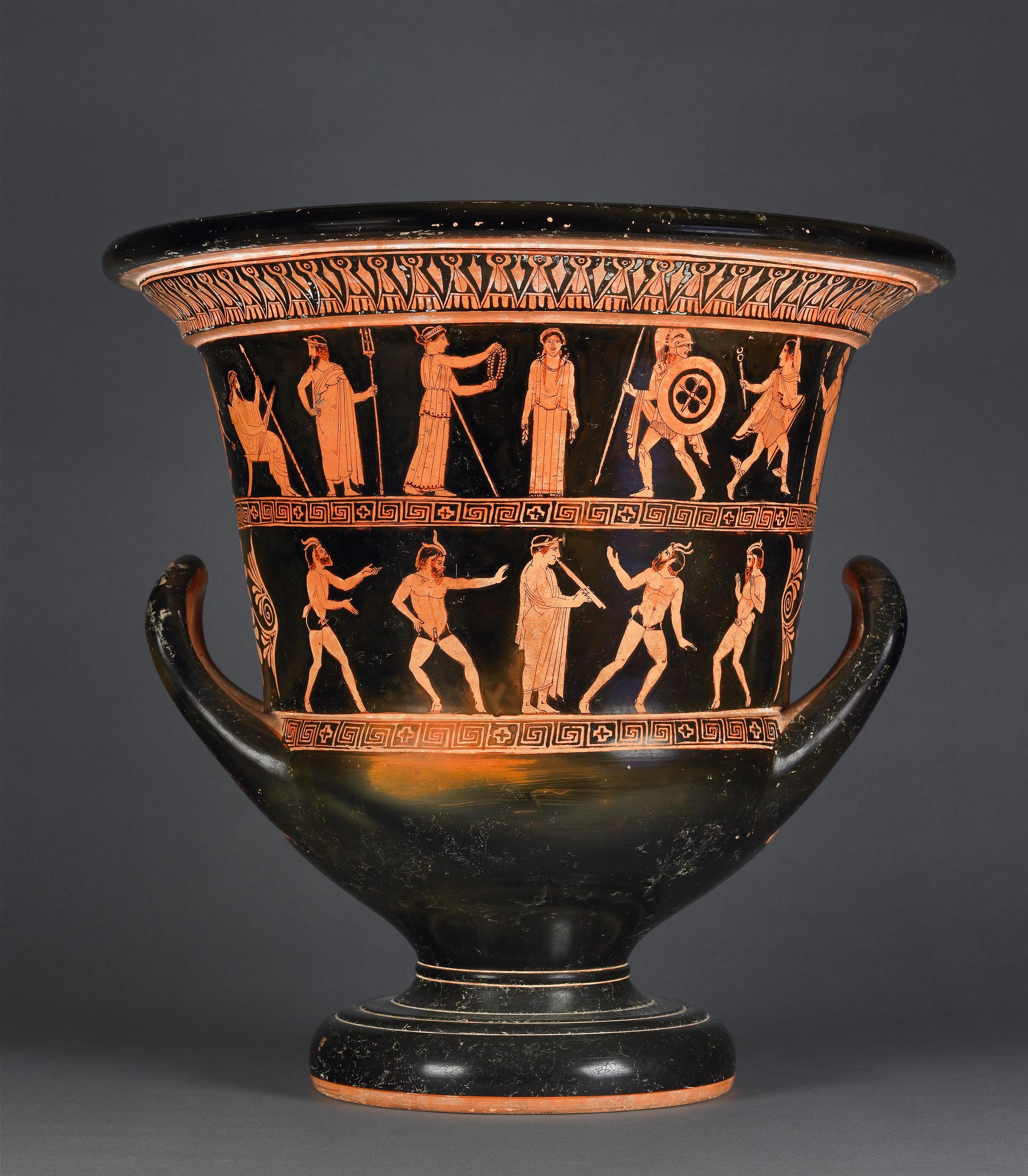
Image source: World History Encyclopedia / The Trustees of The British Museum.
Licensed under CC BY-NC-SA 4.0. (https://creativecommons.org/licenses/by-nc-sa/4.0/)
Original: https://www.worldhistory.org/image/13056/pandora-vase/
판도라가 항아리(πίθος)를 열어 황금시대가 끝나고,
인류가 희망(ἐλπίς)이라는 진정제를 맞으며 고통을 연장하고 있을 때,
아이기스(Αἰγίς)를 지닌 제우스의 의지는 이미 서사에서 지워지고 있었다.
인류는 계속해서 희망 위에 세계를 세우는 실수를 범하고 말았다.
아이기스를 잊은 채, 뚜껑이 닫힌 재앙의 항아리를 바라보며 —
행복의 항아리라고 착각하면서 —
인류는 약속된 내세를 꿈꾸는 지경에 이르렀다.
왜 제우스는 세계를 되돌리지 않았는가?
고통은 임시 상태가 아니라
세계-내-존재의 기본 조건임을 받아들여라.
되돌릴 수 없는 것을
되돌리려 하지 않겠다고 선언하라.
불완전한 제우스가 아이기스를 들어 올린 이 세계를 —
전지전능한 신이 내세를 약속한 세계가 아닌 —
그냥 이대로 긍정하며 전진하라
다시,
그대의 손으로
아이기스를 감당하라.
When Pandora opened the jar (πίθος)
and the Golden Age came to an end,
when humanity was anesthetized
by hope (ἐλπίς),
its suffering merely prolonged—
the will of Zeus,
bearer of the Aegis (Αἰγίς),
had already been erased from the epic.
Humanity persisted
in the same mistake:
building the world upon hope.
Forgetting the Aegis,
gazing at the sealed jar of calamities—
mistaking it for a vessel of happiness—
humanity descended into dreaming
of a promised afterlife.
Why did Zeus not wash the world clean?
Because suffering
is not a provisional state,
but the fundamental condition
of being-in-the-world.
Accept this.
Declare that you will no longer attempt
to reverse
the irreversible.
Affirm this world—
not one promised by an omnipotent god
through an afterlife,
but this very world
where an imperfect Zeus
once raised the Aegis—
and press on.
Again,
with your own hands,
bear
the Aegis.